“Deep clean” and “standard clean” get tossed around like they mean the same thing — but they’re very different services, with very different price tags, and choosing the wrong one is one of the most common reasons people end up disappointed with a cleaning company. This guide explains exactly what each one includes, when to book which, what they cost in Cincinnati and Northern Kentucky, and how to know which one your home actually needs right now.
The 30-second answer
- A standard (or routine) cleaning maintains a home that’s already in decent shape — surface dusting, vacuuming, mopping, kitchen and bathroom upkeep. It’s the everyday clean that keeps things from getting worse.
- A deep cleaning resets a home from the ground up — baseboards, blinds, ceiling fans, inside the oven, inside the fridge, behind appliances, grout, vents, light fixtures, and the buildup that surface cleaning never reaches. It’s what you book once or twice a year, or before recurring service begins.
Think of it this way: standard cleaning is brushing your teeth. Deep cleaning is your dental visit. Both matter. Neither replaces the other.
What’s actually included in a standard cleaning?
A standard cleaning focuses on the visible, frequently-touched surfaces of your home. At Jeannie’s Cleaning, a standard visit to a Cincinnati or Northern Kentucky home includes:
Whole-house
- Dusting all accessible surfaces, furniture tops, shelves, decor
- Vacuuming all carpets, area rugs, and upholstered furniture
- Sweeping and mopping all hard floors
- Emptying trash and replacing liners
- Tidying common areas (straightening cushions, folding throws)
- Spot-cleaning fingerprints from doors, switch plates, and light fixtures
Kitchen
- Counters, backsplash, sink, faucet
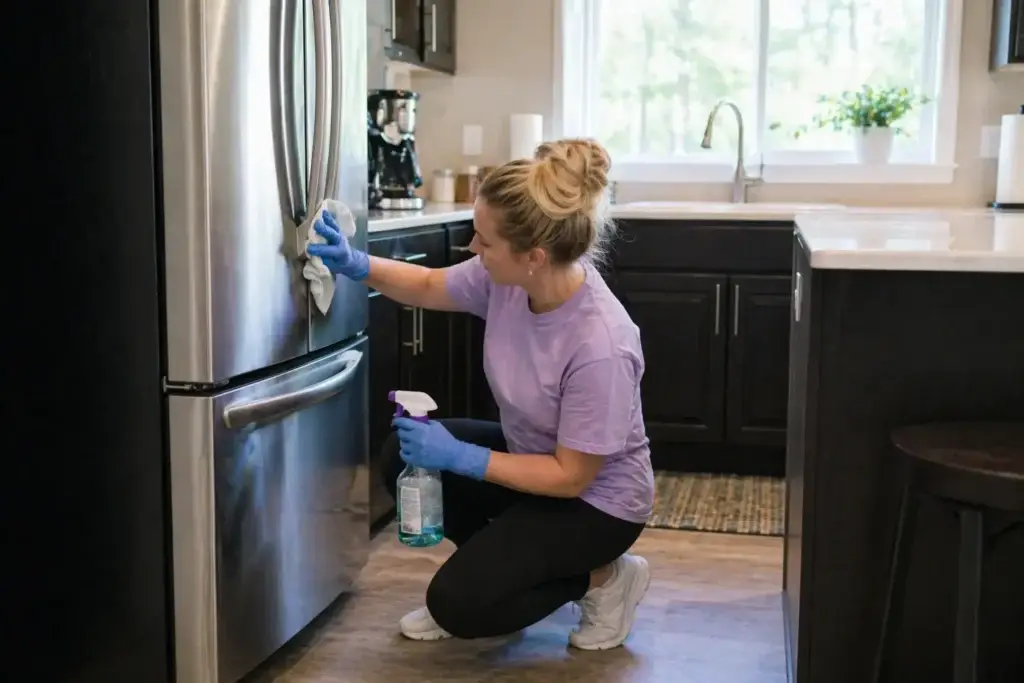
- Stovetop and exterior of appliances (fridge, oven, microwave, dishwasher)
- Inside microwave (yes, included in standard)
- Dining table and chairs
Bathrooms
- Toilet (inside, outside, base, behind)
- Sink, vanity, mirror
- Tub and/or shower (visible scrub, not deep grout work)
- Bath floor
Bedrooms & living areas
- Bed made (sheets straightened, not changed unless requested)
- Surface dusting
- Carpet vacuumed
What standard doesn’t include: baseboards, ceiling fan blades, blinds, light fixtures, vents, window sills, inside oven/fridge, inside cabinets, grout lines, behind/under heavy appliances, walls. Those are deep-clean tasks.
What’s actually included in a deep cleaning?
A deep cleaning includes everything in a standard clean, plus the detailed work that surface cleaning skips:
Whole-house deep tasks
- Hand-wiped baseboards in every room
- Door frames, doors, and door handles
- Light switch plates and outlet covers
- Ceiling fans (blades and pull chains)
- Light fixtures (hand-wiped, bulbs dusted where safely accessible)
- Window sills and ledges
- Blinds (top surface and slats where safe)
- HVAC vents and air return covers
- Wall spot-cleaning (scuffs, fingerprints, smudges)
- Crown molding and trim work
- Detailed dusting of decor, picture frames, and shelving
Kitchen deep tasks
- Inside the oven — racks, door, glass, interior
- Inside the fridge — shelves, drawers, walls (please empty before we arrive)
- Inside the microwave and dishwasher
- Range hood, vent filter
- Behind and under appliances where they pull out safely
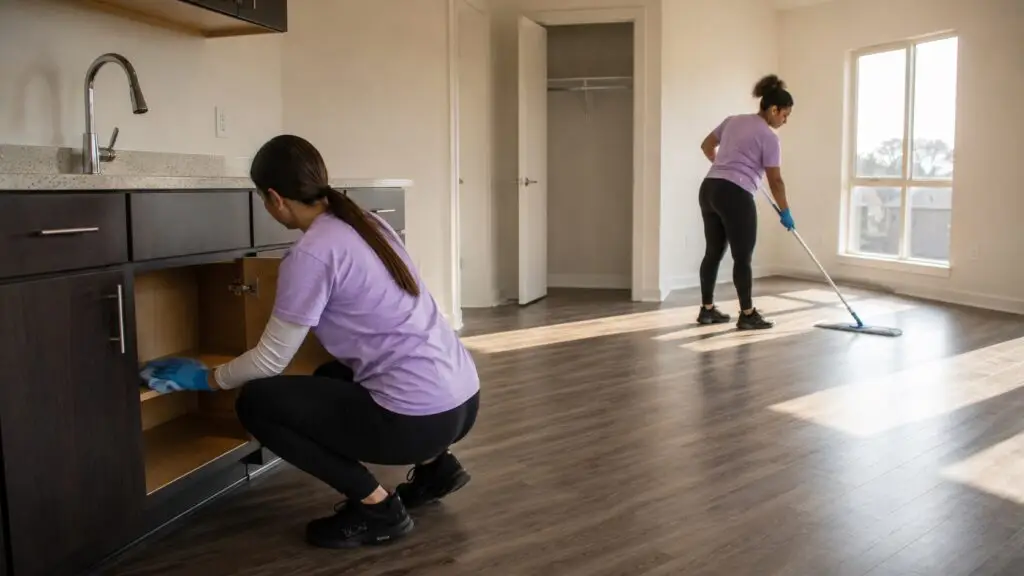
- Inside cabinets (if empty — most common on move-out cleans)
- Cabinet fronts, hand-wiped including grease around handles
- Backsplash detail scrub
- Detailed faucet and fixture polish
Bathroom deep tasks
- Shower tile and grout scrub (the big one — standard clean only does surface scrub)
- Tub jets and drains
- Shower doors and tracks (soap scum, hard water buildup)
- Toilet base, behind toilet, and floor edges
- Exhaust fan covers
- Inside vanity drawers/cabinets (if requested)
- Detailed mildew and hard-water spot work
A deep clean takes 2–3× the time of a standard clean and costs about 1.5–2× the price. For most Cincinnati / NKY 3-bed / 2-bath homes, that’s roughly $294 (standard) vs. $514 (Ultimate Deep Clean). Worth it when you need it — unnecessary when you don’t.
When to book a deep cleaning
Deep cleaning isn’t a luxury — there are specific moments when standard cleaning won’t cut it. Book a deep clean when:
- It’s your first professional cleaning. Almost every cleaning company will recommend a deep clean as your first visit so a recurring schedule starts from a clean baseline. Otherwise you’re paying recurring prices for what’s secretly a deep-clean job.
- It’s been 6+ months since the last professional clean. Buildup compounds. Baseboards, vents, and bathroom grout collect a year of grime that a surface clean can’t touch.
- You’re moving in or moving out. See our move-out cleaning checklist.
- You just finished a renovation. Drywall dust, sanding residue, and fine debris get into every surface and air return.
- Someone in the home has been sick. A full sanitize-everything reset, especially during flu and cold season.
- You’re hosting a major event. Wedding, graduation party, holiday, in-laws visiting from out of town — a deep clean makes the photos look like the home you remember.
- Seasonal reset. Many of our recurring clients book a deep clean twice a year — spring and fall — with bi-weekly standard cleans in between. This is the most cost-effective schedule for most homes.
- You just got a new pet. Especially for homes with new shedding dogs or cats, a deep clean resets carpets, vents, and upholstery.
When standard cleaning is enough
You don’t need a deep clean every time. Standard (or routine) cleaning is the right call when:
- Your home is already on a recurring cleaning schedule
- The home stays generally tidy day-to-day
- You had a deep clean within the last 4–6 months
- You’re keeping a home market-ready or showing-ready
- You just want the weekly upkeep to look picture-perfect
For most Cincinnati and NKY families, the right cadence is: one deep clean to start, then bi-weekly standard cleans, with a deep clean again every 6 months.
Price comparison: standard vs. deep cleaning in Cincinnati / NKY
Typical Jeannie’s Cleaning pricing for a Cincinnati or Northern Kentucky home:
3-bed / 2-bath
- Standard clean: ~$294
- Ultimate Deep Clean: ~$514
- Price difference: ~$220
4-bed / 2.5-bath
- Standard clean: ~$365
- Ultimate Deep Clean: ~$635
- Price difference: ~$270
2-bed condo
- Standard clean: ~$235
- Ultimate Deep Clean: ~$405
- Price difference: ~$170
Compare full pricing detail in our house cleaning cost guide.
How long does each take?
- Standard clean, 3-bed / 2-bath: 2–3 hours with a 2-person team
- Deep clean, 3-bed / 2-bath: 4–6 hours with a 2-person team
- Move-out deep clean, 3-bed / 2-bath: 5–7 hours with a 2-person team
If a company quotes you 90 minutes for a “deep clean” of a 3-bedroom home — it’s not a deep clean. It’s a standard clean with a different label and a higher price.
What about “move-in / move-out” cleaning — is that a deep clean?
Yes, with one important difference: move-out cleans assume the home is vacant, which means we can clean inside empty cabinets, inside empty drawers, behind appliances, and detail every corner without working around furniture. That’s why move-out cleans are usually priced separately from a standard deep clean. See our move-out cleaning service.
Common mistakes people make when choosing between standard and deep cleaning
- Booking a standard clean for a first visit. The cleaner walks in, sees 8 months of baseboard dust, and either (a) does it for free and resents you, or (b) does the surface job and you’re disappointed. Pay for the deep clean up front.
- Assuming “deep clean” means the same thing everywhere. Some companies’ deep cleans don’t include inside the oven. Some include walls. Always ask for a written checklist.
- Booking deep cleans every visit. Wasteful. Bi-weekly standard + twice-a-year deep is almost always the better ROI.
- Skipping the deep clean before listing a home. Real estate agents in Cincinnati and NKY consistently say a professional deep clean before photos pays for itself many times over in offer price.
- Forgetting move-out cleans are a separate category. Don’t book a standard clean for a vacant rental — you’ll fail the walkthrough.
Quick checklist: which one do you need?
- First-time clean? → Deep clean
- Already on recurring service? → Standard
- Moving in / out? → Move-out clean (deep, vacant)
- Post-renovation? → Deep clean
- Hosting a wedding / event? → Deep clean
- Listing your home? → Deep clean
- It’s been less than 4 months since the last deep clean? → Standard
- Spring or fall seasonal reset? → Deep clean
Frequently asked questions
How often should I get a deep clean?
For most Cincinnati and NKY homes on a recurring schedule, twice a year (spring and fall) is ideal. Homes with pets, allergies, multiple kids, or older HVAC may benefit from quarterly.
Can I just do a deep clean once and then skip recurring?
You can — but within 6–8 weeks the surface buildup is back. Most clients find that pairing one annual deep clean with bi-weekly standard cleans is far cheaper and easier than re-deep-cleaning twice a year from a neglected baseline.
Will a deep clean fix permanent damage?
No — we clean, we don’t restore. Stained grout, mildew embedded in caulking, water-damaged wood, and permanent carpet stains may need a specialty restoration service. Honest cleaners will tell you up front what can and can’t come out.
Do I need to be home during a deep clean?
No. Most of our Cincinnati / NKY deep-clean clients leave a code or a key. Just be sure your fridge is empty for the inside-fridge work, and that we can access every room (no locked doors).
Is your Ultimate Deep Clean the same as a deep clean?
Our Ultimate Deep Clean is our most thorough service — it’s the maximum-detail version of a deep clean and includes things like inside cabinets (if empty), behind appliances, and detailed wall work. Standard “deep clean” packages elsewhere usually map closer to our Premium tier.
Not sure which one you need? Tell us about your home and we’ll recommend the right level honestly — even if it’s the cheaper one. Request a free quote or call (859) 750-6618.
What's the actual difference between deep cleaning and regular cleaning?
A regular (or “standard”) cleaning focuses on visible, daily-touch surfaces — dusting, vacuuming, mopping, kitchen and bathroom upkeep. A deep cleaning includes everything in regular PLUS the detail work most people never do: hand-wiped baseboards, ceiling fan blades, blinds, light fixtures, vents, inside the oven, inside the fridge, full shower-grout scrub, behind appliances, door frames, and wall spot-cleaning. Deep cleans take 2–3× longer and cost about 1.5–2× more.
Do I need a deep clean before starting recurring cleaning service?
Almost always — yes. Recurring cleaning is designed to maintain a home that’s already at a clean baseline. If your last professional clean was 6+ months ago (or never), there’s accumulated buildup on baseboards, vents, and bathroom grout that surface cleaning can’t address. Pay for one deep clean up front so your recurring visits start from clean. Otherwise you’re paying recurring prices for a deep clean’s work — and the cleaner walks in already behind.
How often should I get a deep clean if I have recurring service?
For most Cincinnati / NKY homes on bi-weekly maintenance, twice a year (spring and fall) is the sweet spot. Pet-heavy households, allergy-sensitive families, or homes with very busy kitchens benefit from quarterly deep cleans. If you’re already on weekly recurring, you can usually stretch deep cleans to once a year.
How much longer does a deep clean take than a regular clean?
For a typical 3-bed / 2-bath home: a regular clean runs 2–3 hours with a 2-person team; a full deep clean runs 4–6 hours; a move-out deep clean on a vacant home runs 5–7 hours. If a company quotes you a 90-minute “deep clean” on a 3-bedroom house, it’s not actually a deep clean — it’s a regular clean with the label changed and the price raised.
Should I do a deep clean before or after a renovation?
After. Drywall dust, sanding residue, and construction debris settle into every air return, vent, baseboard, and surface during a renovation — even with plastic sheeting. A post-renovation deep clean focuses on fine-particle removal: HVAC vents, behind appliances, every horizontal surface, wall wipe-downs, and light-fixture detail. Schedule the deep clean 24–48 hours after the contractor finishes so dust has settled.
Is a deep clean worth the extra cost?
If it’s been more than 4 months since your last professional clean — yes, almost always. The added time on baseboards, blinds, light fixtures, inside the oven, and bathroom grout addresses buildup that a regular clean physically can’t reach in 2 hours. If you just had a deep clean 6 weeks ago and your home is in good shape, a regular clean is the right call — don’t overpay for a deep clean when you don’t need one.
Can I do a deep clean myself instead of hiring it out?
Yes — it just takes time. A motivated homeowner can deep-clean a 3-bed / 2-bath in 8–12 hours over a weekend with the right supplies ($60–$120 for oven cleaner, grout brush, microfiber, mop). The trade-off: you’ll likely skip the hardest tasks (inside oven, behind appliances, grout) and the time cost is significant. Most clients find it cheaper to DIY regular cleans but pay for professional deep cleans twice a year.
What's the difference between deep cleaning and a move-out clean?
Move-out cleans are deep cleans on vacant homes. The big difference: with no furniture in the way, we clean inside empty cabinets, inside empty drawers, behind appliances, baseboards in every room edge-to-edge, and detail every corner. Move-out cleans are priced higher because they include more surface area. If your home is furnished, even an Ultimate Deep Clean won’t include inside-cabinets work — we can’t access closed cabinets full of dishes.
What's included in "inside the oven" cleaning?
A proper inside-oven deep clean (included in our Ultimate Deep Clean and as an add-on at $35–$50 for other tiers) covers: removing and scrubbing the oven racks, scrubbing the interior walls and floor, cleaning the door glass inside and out, hand-wiping the door seal and hinges, and cleaning the broiler pan / drawer. We use a low-fume oven cleaner safe for residential ovens; if you have a self-cleaning oven, we coordinate timing so the self-clean cycle doesn’t conflict with our visit.
Will a deep clean remove pet odors and stains?
Surface odors: yes — the combination of vent cleaning, baseboard scrub, and floor mopping removes most ambient odor. Embedded carpet stains and odors deep in padding: usually no — those need a separate carpet steam-cleaning service. We’ll always tell you up front what we can and can’t remove. For pet households we recommend pairing our deep clean with a professional carpet cleaner the same week.
Do I need to empty my fridge before the cleaners arrive for a deep clean?
For inside-the-fridge work — yes, please empty everything (or move it to a cooler) so we can pull shelves, wipe walls, clean drawers, and scrub the back. We typically ask for this in your booking confirmation. If you can’t empty it the morning of, just let us know and we’ll skip inside-fridge for this visit and credit the add-on toward your next.
Should I tip more for a deep clean than a regular clean?
Customary is to keep the tip percentage similar (10–20% range) which naturally means a higher dollar amount on a deep clean since the bill is higher. Common range: $20–$50 per cleaner per visit for a deep clean. Tipping is appreciated, never required, and 100% goes to your specific cleaners.
Can a deep clean happen while we're home?
Absolutely — most do. We work room by room and the team is happy to coordinate so we’re not in the same room you’re using. If you have a meeting, baby napping, or work calls scheduled, just let us know in advance and we’ll plan the route accordingly. Most clients prefer to leave for the 4–6 hours and return to a finished home.
Does a deep clean include cleaning windows inside and out?
Interior windows: yes, in our Ultimate Deep Clean. Exterior windows: no — those are a specialty service that requires extension equipment, water-fed poles, and different liability coverage. We can recommend trusted Cincinnati / NKY window-cleaning partners. Interior glass on slider doors and French doors is always included in our deep clean.
How long after a deep clean does the home stay deep-clean?
Realistic answer: about 2–6 weeks depending on household intensity. Baseboards stay clean for months; bathroom grout can start to show buildup in 4–8 weeks for high-use bathrooms; inside-oven stays clean for 2–6 months depending on cooking frequency. Pairing a deep clean with bi-weekly maintenance is the longest-lasting strategy — the maintenance visits keep the deep-clean baseline intact between full deep cleans.
Ready for a Spotless Home?
Get a free, no-obligation quote — room-by-room pricing, no contracts.