Retail is the one commercial category where cleanliness is directly part of the product. An office can have a dusty ledge and nobody outside the company ever knows. A storefront with smudged entry glass and a tired-looking floor is telling every customer something about the business before a staff member says a word.
Retail cleaning also has constraints that office cleaning does not: merchandise everywhere, fixtures that cannot be moved casually, security considerations after close, and a schedule that has to fit around trading hours rather than a standard nine to five. This guide covers what a retail cleaning scope should include, what changes by store type, and what to watch for when hiring.
What customers actually notice
A professional commercial cleaning service weights a retail budget toward what a customer registers in the first thirty seconds:
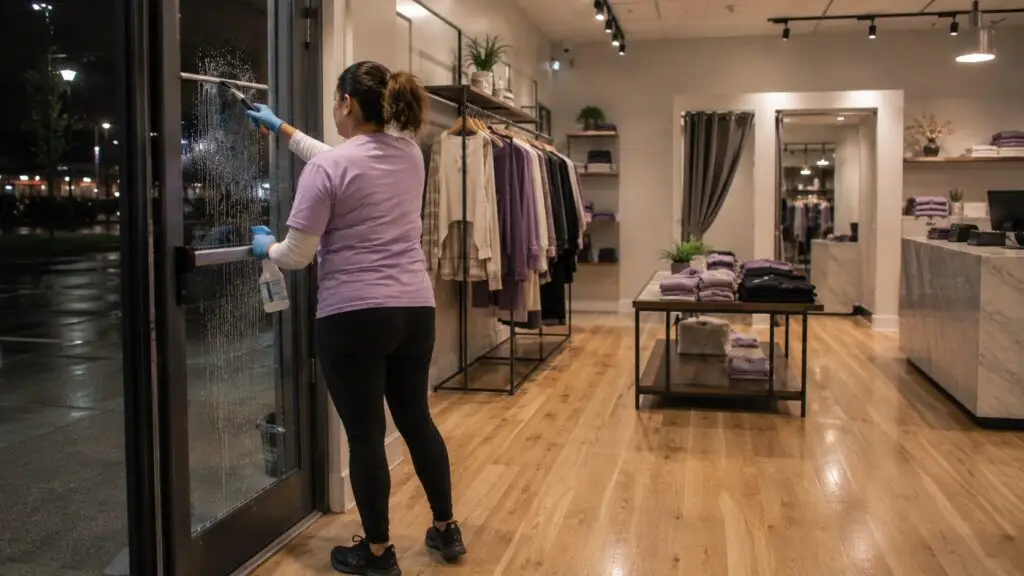
- Entry glass and doors, particularly at handle height where every hand lands
- Floors, especially the main traffic path from the door inward
- Restrooms, if customers have access, which for many stores is the single biggest reputational risk
- Fitting rooms in apparel, where customers are alone with the details
- Checkout counters, the one surface almost every customer touches
Back stock areas and staff rooms matter for staff morale and safety, but they should not be consuming the budget that the sales floor needs.
A realistic retail cleaning scope
Every visit
- Entry glass, door glass, and handles cleaned
- Main traffic floors swept, vacuumed, or mopped by surface type
- Entry mats vacuumed or replaced
- Checkout counters and payment terminals wiped and disinfected
- Restrooms cleaned, disinfected, and restocked
- Fitting rooms cleaned, mirrors done, floors cleaned, benches wiped
- Trash and recycling emptied throughout, including back areas
- Shared touchpoints disinfected: door handles, rails, shared pens, counter surfaces
- Break room and staff area basics
Weekly
- Full floor coverage including under and behind fixtures where accessible
- Detailed dusting of shelving edges, display units, and low fixtures
- Interior glass, display cases, and mirrors in full
- Baseboards along customer-facing walls
- Detailed fitting room work including corners, tracks, and hooks
Monthly and periodic
- High dusting: shelf tops, signage, light fixtures, vents, ceiling corners
- Hard floor maintenance appropriate to the surface
- Carpet extraction in carpeted areas
- Window tracks and sills
- Stockroom and back-of-house detail
Scheduling around trading hours
Most stores are cleaned after close, and for good reason: floors need drying time, vacuums are disruptive, and nobody wants to work around a cleaning cart during trading. After-close also means the store opens clean rather than being cleaned in front of customers.
Before-open cleaning is the alternative for stores that cannot grant after-hours access or that close too late for a practical crew schedule. It works, but the window is usually tighter and less forgiving if anything runs over.
The practical issues to sort before the first visit are alarm codes and procedures, who holds keys, whether the crew is on camera and who monitors it, and what happens if an alarm trips at eleven at night. Anyone with after-hours access to a store holding inventory should be background checked, and you should be told when the assigned crew changes.
What changes by store type
Apparel and footwear
Fitting rooms are the pressure point and they need daily detail: mirrors, floors, benches, hooks, and the corners where tags and pins collect. Mirrors throughout need to be genuinely clean rather than approximately clean, because customers study themselves in them. Carpet is common and needs a real extraction schedule.
Grocery, convenience, and specialty food
Floors carry more weight and more risk. Spills are a safety and liability matter, not just an appearance one. Food areas need sanitizing rather than only cleaning, and cleaning schedules have to coordinate with health inspection requirements. Back-of-house areas including coolers and prep spaces have their own standards.
Home goods, furniture, and showrooms
Large floor areas, extensive dusting on horizontal display surfaces, and high dusting on tall fixtures and signage. Merchandise is delicate and expensive, so a crew needs clear instruction on what they may and may not touch or move.
Salons, spas, and personal care
Higher disinfection standards because of direct client contact, plus specific handling for hair, product residue, and water areas. Restrooms and treatment spaces need daily attention and often more than once daily.
Small independent storefronts
Often the owner has been cleaning it themselves after close for years, which is genuinely the most expensive cleaning arrangement available once you count the owner’s time. These stores usually need less frequency than a chain but benefit most from getting it off their own plate.
Seasonal reality in this region
Retail floors in Cincinnati and Northern Kentucky take real damage from roughly November through March. Salt, slush, and grit come through the door on every customer and grind into flooring, and entry areas need more attention than the rest of the year. Many stores hold their overall schedule but add entry-focused work through winter, which is considerably cheaper than replacing flooring early.
The holiday trading period compounds it: higher footfall, tighter turnaround, and the least tolerance for a store that looks tired. Plan the increase rather than reacting to it in December.
What to specify when hiring
Retail scopes go wrong in predictable ways, so state these explicitly:
- What may be moved and what may not. Displays, mannequins, merchandise, signage.
- Who handles spills during trading hours, since the cleaning crew is not on site then.
- Fitting room frequency and detail, called out separately rather than folded into “sales floor.”
- Whether restrooms are customer-accessible, which changes frequency significantly.
- Floor surface types by area, since a store often has three or four different surfaces needing different treatment.
- Security procedures: keys, alarms, cameras, and who to call.
- Seasonal adjustments built into the agreement rather than negotiated in a hurry.
Signs your retail cleaning is not working
- Entry glass is smudged at handle height most mornings
- Fitting rooms have visible debris in corners
- The main traffic path shows a visible lane against the surrounding floor
- Customer restrooms generate complaints or reviews
- Shelf tops and high fixtures are visibly dusty from customer eye level
- Staff are doing cleaning tasks during trading hours to compensate
Retail cleaning across the region
We clean retail spaces, showrooms, salons, and storefronts throughout Greater Cincinnati and Northern Kentucky, including Covington, Newport, Bellevue, Fort Thomas, Florence, Erlanger, Edgewood, Fort Mitchell, Independence, and across Cincinnati. Our cleaners are background-checked W-2 employees rather than subcontractors, and we are licensed, bonded, and insured, which matters more than usual when someone has after-hours access to a building full of inventory.
We schedule around trading hours rather than the reverse, and we do not require long-term contracts. You can see the full scope on our commercial office cleaning page, and our first commercial clean is free with no obligation.
Want a scope built around your store? Tell us your surfaces, your trading hours, and whether customers use your restrooms, and we will put the whole thing in writing. Request a free retail cleaning quote or call (859) 750-6618.
How often should a retail store be cleaned?
Daily after close for most storefronts. Retail cleanliness is part of the customer experience rather than back-office housekeeping, so entry glass, floors, restrooms, and fitting rooms need daily attention. Lower-traffic independent stores may work on a reduced schedule, but customer-accessible restrooms and fitting rooms are the two areas where cutting frequency reliably backfires.
Should retail cleaning happen before opening or after closing?
After close is generally better. Floors get drying time, the work is not disruptive to customers, and the store opens clean rather than being cleaned in front of shoppers. Before-open cleaning is a reasonable alternative when after-hours access is not possible or the store closes very late, but the window is tighter and less forgiving if anything runs long.
Do cleaners move merchandise and displays?
Only what you specify in writing. Most vendors will not move merchandise, mannequins, or displays by default, both to protect stock and to avoid liability. If you want cleaning under or behind fixtures, agree in advance exactly what may be moved, by whom, and how it should be returned. Vague instructions here are how expensive things get broken.
How do you handle security and after-hours access for a store?
Settle it in writing before the first visit: who holds keys, who knows the alarm code, what the procedure is if an alarm trips, and whether the crew is on camera. Anyone with after-hours access to a building full of inventory should be background checked, and you should be notified when the assigned crew changes. A vendor casual about this is a genuine risk in retail.
How often should fitting rooms be cleaned?
Daily at minimum, and they deserve to be called out separately in the scope rather than folded into general sales floor cleaning. Fitting rooms need mirrors, floors, benches, hooks, and corners where tags and pins collect. Customers are alone in them and studying the details, which makes them disproportionately influential on how clean a store feels.
What extra cleaning do retail floors need in winter?
Entry areas need considerably more attention from roughly November through March in this region. Salt, slush, and grit arrive on every customer’s shoes and grind into flooring, causing damage that outlasts the season. Most stores keep their overall schedule and add entry-focused work through winter, along with more frequent mat service, which costs far less than early floor replacement.
Who cleans up spills during trading hours?
Your staff, since the cleaning crew is not on site during trading. This should be explicit in your scope so nobody assumes otherwise, and your team should have supplies and a procedure for it, particularly in food retail where a spill is a safety and liability matter. The cleaning vendor handles the thorough treatment of the area at the next visit.
Do you clean salons and personal care businesses?
Yes. These need higher disinfection standards because of direct client contact, plus specific handling for hair, product residue, and water areas. Restrooms and treatment spaces typically need daily attention and sometimes more than once daily. Scheduling usually has to work around appointments rather than a standard close, which we plan for rather than treat as an exception.
Related guides
- Commercial Cleaning vs Janitorial Services — routine upkeep versus periodic deep work.
- Office Cleaning Services: What’s Actually Included — useful if your store has back-office space too.
- How to Choose a Cleaning Company — the vetting questions that matter when someone has after-hours access to your stock.
Ready for a Storefront That Sells?
Get a free, no-obligation retail cleaning quote. No contracts, and your first clean is on us.