Turnover cleaning is the one job in this industry where the deadline is genuinely immovable. A new tenant has a signed lease and a move-in date. If the unit is not ready, that is not an inconvenience, it is a legal and financial problem. Every other kind of cleaning can slip by a day. This one cannot.
That single constraint shapes everything: how turnovers are scoped, how they are scheduled, and why the cheapest quote is so often the most expensive decision a property manager makes. This guide covers what a turnover clean actually includes, how it differs from a standard clean, where the boundary sits between cleaning and maintenance, and what to specify if you are managing more than a handful of units across Cincinnati and Northern Kentucky.
What a turnover clean actually is
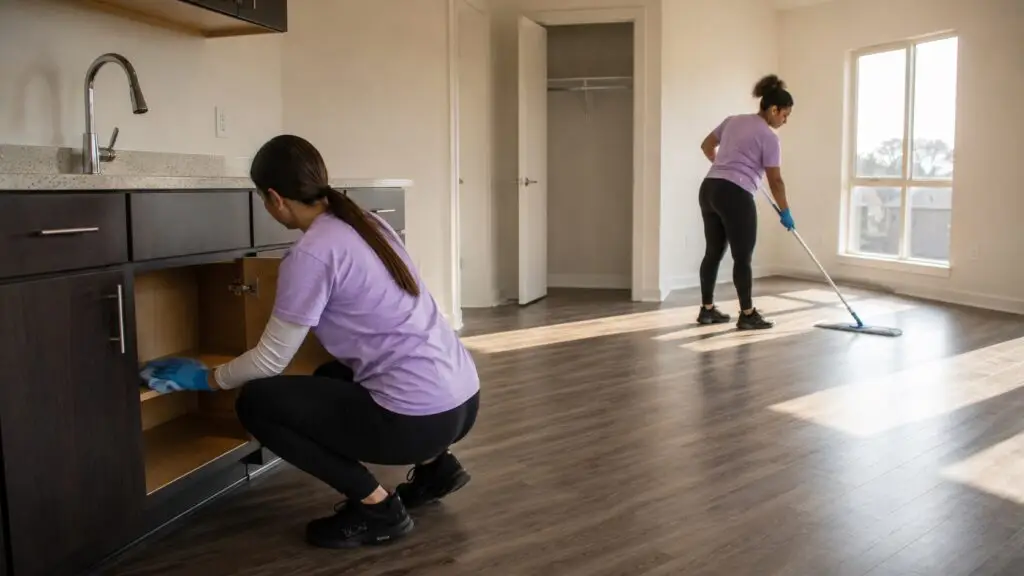
An apartment turnover clean is a deep clean of a vacant unit, performed to a rent-ready standard between tenants. The defining feature is that the unit is empty, which changes the work in both directions: there is no furniture to clean around, but there is also nowhere for dirt to hide. Every surface is visible and every surface is in scope.
It is not a standard clean applied to an empty room. A standard clean maintains a lived-in home. A turnover resets a unit to the condition a prospective tenant expects on a first viewing, which is a materially higher bar.
Room by room
Kitchen
- Inside, outside, and underneath every cabinet and drawer
- Inside the oven, including racks, door glass, and the drawer beneath
- Inside the refrigerator and freezer, including seals, drawers, and the coils area where accessible
- Behind and underneath the refrigerator and range where they can be safely moved
- Range hood, filter, and the wall behind the cooking surface
- Dishwasher interior, seal, and filter
- Countertops, backsplash, sink, faucet, and garbage disposal opening
- Light fixtures and switch plates
The kitchen is where turnovers are won or lost. A prospective tenant opens the oven and the refrigerator. Those two doors decide the impression.
Bathrooms
- Tub, shower, tile, and grout, including hard water and soap scum removal
- Shower door tracks and glass, or curtain rod
- Toilet inside, outside, base, behind, and the floor around the mounting bolts
- Vanity inside and out, drawers, sink, faucet, and mirror
- Exhaust fan cover
- Floor including edges and behind the toilet
Throughout the unit
- All floors: vacuumed, swept, and mopped edge to edge including closet interiors
- Baseboards, door frames, doors, and door hardware
- Window interiors, sills, and tracks
- Blinds, where present and where they survive cleaning
- Light fixtures, ceiling fans, and bulbs dusted
- Switch plates and outlet covers
- HVAC vents and return covers
- Closet shelving and rods
- Wall spot-cleaning for scuffs and marks
- Balcony or patio sweep where applicable
Where cleaning ends and maintenance begins
This is the boundary that causes the most friction between property managers and cleaning vendors, so it is worth stating plainly. A cleaning crew removes dirt. It does not repair damage.
Things a turnover clean will not fix:
- Carpet stains that have set into the padding, and carpet that needs replacing rather than cleaning
- Grout and caulk that are permanently discoloured or failing and need re-grouting or re-caulking
- Paint that needs touching up or a full repaint after wall marks are removed
- Holes, gouges, and drywall damage
- Burns, chips, or scratches in countertops, tubs, and flooring
- Appliances that are worn out rather than dirty
- Odours embedded in porous material such as carpet padding or subfloor
A good vendor tells you this before the clean, ideally at the walkthrough, so you can get a painter or a carpet contractor scheduled in parallel rather than discovering it the day before move-in. A vendor who says nothing and hands you a finished unit with a stained carpet has cost you a day you did not have.
Sequencing matters more than speed
The most common way a turnover goes wrong is not slow cleaning. It is bad sequencing. The correct order is:
- Trash-out and removal of anything the previous tenant left behind
- Repairs and maintenance: drywall, fixtures, appliance swaps
- Painting
- Carpet cleaning or replacement
- Final turnover clean
- Inspection
Cleaning goes second to last, always. If a painter works after the clean, you are paying for the clean twice, because paint dust and drop-cloth grit land on every surface. Property managers who schedule cleaning before trades finish are the single biggest cause of a unit failing its own inspection.
What changes at volume
Managing one unit is a scheduling task. Managing thirty is an operations problem, and the vendor relationship needs to reflect that.
- Standing capacity beats one-off booking. If your leases cluster at month end, as most do, you need a vendor who has reserved capacity in that window rather than one you call each time.
- Consistent scope, unit by unit. A written checklist applied identically to every unit means your inspections become quick and predictable.
- Access without you. Lockbox codes, key handover, or a management system the crew can work with. If a manager has to meet the crew at every unit, the model does not scale.
- One point of contact on both sides. Not a general inbox.
- Photo documentation. Before and after photos protect both parties and settle deposit disputes.
- A realistic view of same-day turns. A same-day turn between a morning move-out and an afternoon move-in is possible for a small unit in good condition. It is not possible for a heavily used unit, and a vendor who promises otherwise on every unit is going to disappoint you eventually.
What to put in writing
- The full task list, room by room, with inside-appliance work called out explicitly rather than implied
- What is excluded: repairs, painting, hauling, carpet replacement
- Turnaround time from access granted to unit complete, by unit size
- Access arrangements and who holds keys or codes
- Notification process when the crew finds damage beyond cleaning
- Photo documentation: whether it is provided, and how you receive it
- What happens if the unit fails inspection, and the response window
- Peak-period capacity, especially month end and the summer leasing season
Signs your current turnover vendor is not working
- You are finding issues at inspection that should have been caught by the crew
- Nobody tells you about damage until you see it yourself
- Quality varies noticeably between units
- Month end is a scramble every single month
- You are doing touch-ups yourself before showings
- Inside-appliance work is inconsistent, which is the most common single failure
Turnover cleaning across Cincinnati and Northern Kentucky
We handle apartment and rental turnovers throughout Greater Cincinnati and Northern Kentucky, including Covington, Newport, Bellevue, Fort Thomas, Florence, Erlanger, Edgewood, Fort Mitchell, Independence, Cold Spring, Highland Heights, Alexandria, and across Cincinnati. Turnovers are cleaned at our deepest scope, because a vacant unit gets the full treatment rather than a maintenance clean.
Our cleaners are W-2 employees rather than subcontractors, all background checked, and we are licensed, bonded, and insured, which matters when someone holds access to vacant units. We flag damage beyond cleaning as soon as we find it, so you can get a trade scheduled instead of discovering it at inspection. We also do not require long-term contracts, so you are not locked in if your portfolio changes.
You can see the full commercial scope on our commercial office cleaning page, and our first commercial clean is free with no obligation, which is a low-risk way to test us on a single unit before committing a portfolio.
Managing turnovers across multiple units? Tell us your unit count, your typical lease-end pattern, and your inspection standard, and we will put the scope and turnaround in writing. Request a free quote or call (859) 750-6618.
What is included in an apartment turnover clean?
A full deep clean of the vacant unit: inside and outside all cabinets and drawers, inside the oven and refrigerator, behind and under appliances where they move safely, complete bathroom work including tub, tile and grout, all floors edge to edge including closets, baseboards, doors and frames, window interiors and tracks, blinds, light fixtures, vents, switch plates, and wall spot-cleaning. The unit is empty, so everything is in scope.
How is a turnover different from a standard cleaning?
A standard clean maintains a home someone lives in and works around furniture and belongings. A turnover resets an empty unit to a rent-ready standard for a prospective tenant, which is a higher bar. With nothing in the way, inside-cabinet, inside-appliance, closet interior and edge-to-edge floor work all become part of the job rather than optional extras.
Do you repair damage or just clean?
We clean; we do not repair. Set carpet stains, failing grout or caulk, paint touch-ups, drywall damage, chips and burns in surfaces, and worn-out appliances all need a trade rather than a cleaner. What we do is tell you as soon as we find it, ideally at the walkthrough, so you can schedule a painter or carpet contractor in parallel instead of discovering it the day before move-in.
When should cleaning happen in the turnover sequence?
Second to last, always: trash-out, then repairs, then paint, then carpet, then the clean, then inspection. If any trade works after the clean, you pay for it twice, because paint dust and grit land on every surface. Scheduling cleaning before the trades finish is the most common reason a unit fails its own inspection.
Can you do a same-day turn between tenants?
Sometimes. A smaller unit left in reasonable condition can be turned between a morning move-out and an afternoon move-in. A heavily used unit realistically cannot, and any vendor who promises same-day on every unit will eventually miss one. Tell us the unit size and condition and we will give you a straight answer rather than an optimistic one.
Do you work with property managers on multiple units?
Yes, and it works best with reserved capacity rather than booking each unit as it comes up, since most portfolios cluster at month end. We use one written scope applied identically to every unit so inspections stay predictable, work from lockbox or key access without a manager present, and keep a single point of contact on both sides.
How do you handle access to vacant units?
Lockbox code, key handover, or whatever your management system uses, agreed in writing before the first unit. Everyone entering is a background-checked W-2 employee rather than a subcontractor, and we are licensed, bonded and insured, which matters more than usual when a crew holds access to empty units.
Do you provide photos of completed units?
Yes, on request. Before and after photos are genuinely useful in this category: they document the condition you received the unit in, they protect both sides in a deposit dispute, and for managers running multiple properties they reduce how often you need to physically inspect before a showing.
Does turnover cleaning include carpet cleaning?
Carpet cleaning is a separate service with separate equipment, and it should happen before the final clean rather than after. We can coordinate the sequencing so the carpet is done first and the turnover clean follows, which is the order that leaves the unit genuinely finished.
What if the unit fails inspection after cleaning?
Tell us what was missed and we return to correct it, within a 24-hour window. Worth separating two things though: an item on the scope that was genuinely missed is ours to fix, whereas damage that needed a trade was never a cleaning issue. That is exactly why we flag damage in advance rather than at handover.
Related guides
- Commercial Cleaning vs Janitorial Services — routine upkeep versus the deeper periodic work, and which your portfolio needs.
- How to Choose a Cleaning Company — the vetting questions that matter when a crew holds access to vacant units.
- Office Cleaning Services: What’s Actually Included — useful if you also manage leasing offices or common areas.
Turnovers Done On Time
Get a free, no-obligation quote with scope and turnaround in writing. No contracts, and your first clean is on us.